Referral Marketing for Businesses: Turn Happy Customers Into New Ones
A practical guide to referral marketing for businesses: when to ask, what to offer, simple referral programs, tracking referrals, thanking people, partner referrals and the mistakes that kill word of mouth.
On this page
For most businesses, the best customers arrive the same way: "My friend told me about you." They trust you before they've met you, they're easier to serve, and they often stay longer. Yet very few businesses do anything to encourage those recommendations; they simply hope. Referral marketing turns that hope into a habit: asking at the right moment, making it easy to recommend you, and thanking the people who do.
Why referrals are worth the effort#
A recommendation from someone you know carries a trust no advert can buy. Referred customers also tend to be valuable over time; research published in the Harvard Business Review on the value of word of mouth argued that a customer's value includes the new customers they bring in, and that some modest spenders are valuable mainly because of who they refer. And for a business, referrals cost little: a thank-you and some attention, rather than an advertising budget.
Step 1: Be worth recommending#
No referral program fixes a disappointing service. Before asking for referrals, make sure the basics make people want to talk about you: you do what you promised, on time, you fix problems quickly, and there's something memorable about the experience, such as a personal follow-up, a small extra or a thoughtful touch. People recommend businesses that made them feel looked after.
Step 2: Ask at the right moment#
Most customers are happy to refer you; they just don't think of it. The best moments to ask:
- When a customer thanks you or says they're happy.
- Right after you deliver a great result: the finished project, the fixed car, the event that went well.
- When they leave a positive review.
- When they reorder or renew, which shows they value you.
Keep the ask simple and specific: "I'm so glad it worked out. If you know anyone else planning an office move, we'd love to help them too. Here's a link you can forward."
Step 3: Make it easy to refer#
The fewer steps, the more referrals. Give people something they can pass on in seconds:
- A short message they can forward on WhatsApp, with your name, what you do and a link.
- A personal referral code or link, so you know who sent whom.
- A few business cards, or a card in the delivery with "Share this with a friend".
- A clear page on your website explaining the referral offer.
Step 4: Decide on a reward (or not)#
Many referrals happen with no reward at all, just a sincere thank-you. A reward can encourage more, as long as it suits your business:
| Reward | Works well for |
|---|---|
| Discount on the next purchase | Shops, salons, restaurants |
| Free extra service or upgrade | Service businesses with spare capacity |
| Store credit | Businesses with repeat purchases |
| Reward for both referrer and new customer | Most businesses; the new customer has a reason to act |
| Cash or commission | Business-to-business referrals and partners |
Pay the reward when the referred person becomes a paying customer, not just when they enquire, and set a simple rule for what counts. Keep your margins in mind: a reward should cost less than what you'd spend to win a customer another way.
Step 5: Track referrals#
Without tracking, you can't thank the right person or see what's working. Keep it simple:
- Ask every new customer "How did you hear about us?" and record the answer, including the referrer's name.
- Use referral codes where it makes sense, so online orders are tracked automatically.
- Note referrals in your customer records. The CRM in the Tekservix Business Suite keeps customers, deals and notes together, which makes it easy to see who referred whom.
Step 6: Thank people, every time#
The thank-you matters more than the reward. Send a personal message as soon as a referral becomes a customer: "Thank you for recommending us to Grace. She's booked her first cleaning for Friday, and your 10% credit is on your account." People who feel appreciated refer again; people who hear nothing usually don't.
Partner referrals#
Customers aren't the only source. Businesses that serve the same customers but don't compete with you can refer each other: a wedding photographer and a florist, an accountant and a lawyer, a web designer and a printer. Agree how you'll refer, whether there's a commission, and how you'll keep each other informed. Some software companies run formal partner programs that pay commission for referrals; our guide to affiliate programs explains how those work.
Mistakes that kill referrals#
- Asking too early, before the customer has experienced the result.
- Asking constantly. One well-timed request beats a reminder in every message.
- Complicated rules, such as rewards that expire in a week or require forms.
- Forgetting the reward or paying it late, which turns a fan into a critic.
- Treating referred customers worse than the referrer expected. Their experience reflects on the person who recommended you.
A worked example#
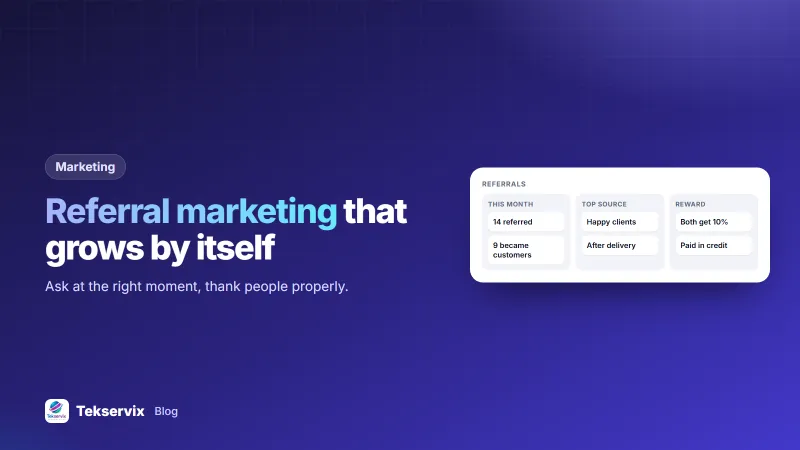
Imagine a home cleaning company with 80 regular clients. After each client's third clean, when satisfaction is usually highest, it sends a WhatsApp message thanking them and offering both them and any friend they refer 10% off their next clean, with a short message they can forward. Every new client is asked how they heard about the company, and referrals are noted in the CRM. Within three months, 14 clients have referred someone and 9 of those friends have become regular clients. The company spends nothing on ads for those customers, only the discounts and a few minutes of thank-you messages. For keeping in touch with clients between cleans, see customer follow up.
Frequently asked questions
What is referral marketing?
Referral marketing means deliberately encouraging existing customers, partners or contacts to recommend your business to people they know, often with a thank-you or reward, and tracking which new customers came from those recommendations.
What is a good referral reward?
Something your customers value that doesn't destroy your margin: a discount on their next purchase, a free extra service, store credit, or a reward for both the referrer and the new customer. Double-sided rewards often work best.
When is the best time to ask for a referral?
Right after a clear moment of satisfaction: when a customer thanks you, leaves a good review, receives a great result, or reorders. That's when they're most likely to think of someone who'd benefit.

Tekservix Team
The team behind Tekservix
The Tekservix Team builds and supports Tekservix: WhatsApp and SMS APIs, AI tools, invoicing, PDF and SEO tools for growing businesses. We write practical, tested guides based on what we see our customers do every day.
More articles from the Tekservix Team